What riding actually asks of your body
Snowboarding is mostly a long, low squat with constant small adjustments. Your quads and glutes hold you in a flexed position for minutes at a time, your ankles and hips steer, and your core keeps your upper body quiet while your legs work. Most injuries and most bad turns happen late in the day, when those muscles are tired and form falls apart.
So the goal isn't to max out your squat. It's to build legs that can stay low and controlled for a long time, and balance that holds up when you're tired.
The core moves
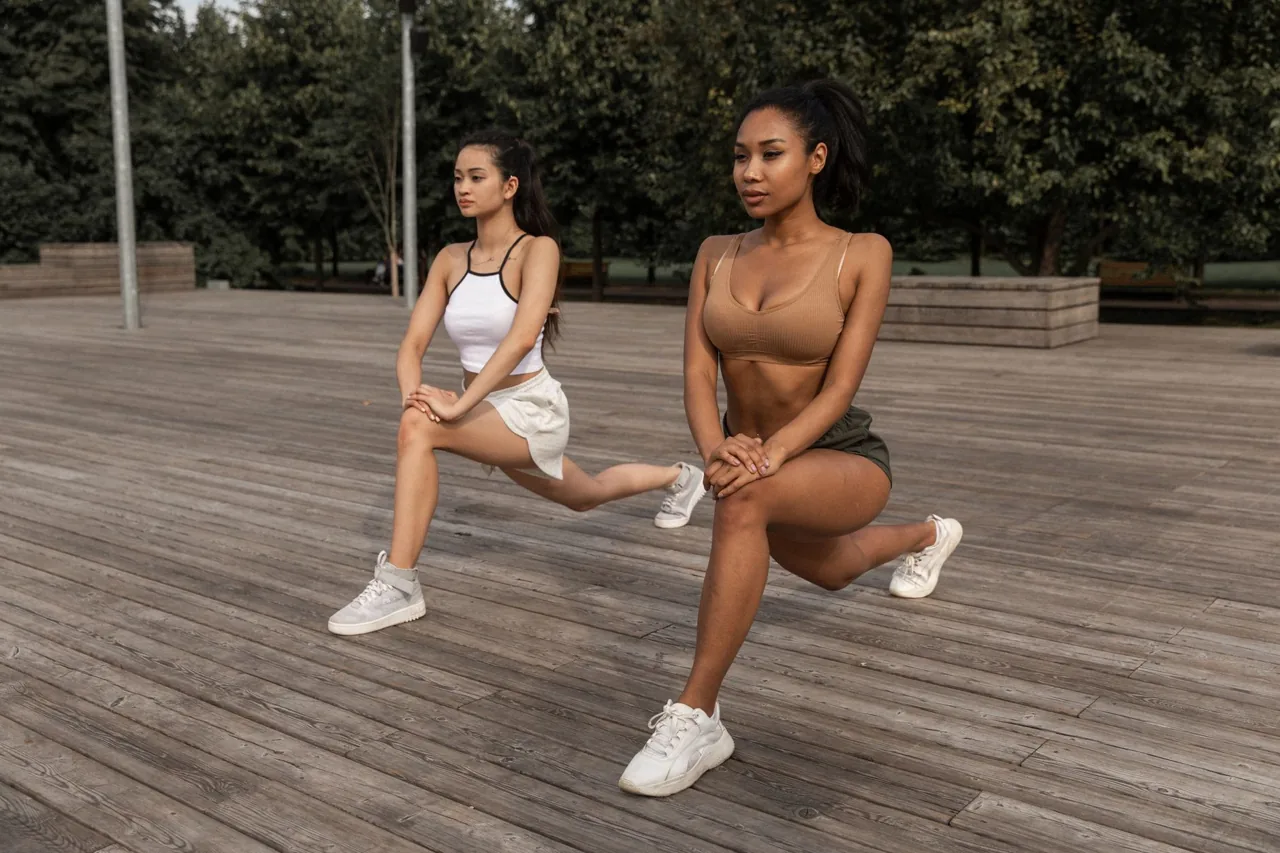
Split squats and Bulgarian split squats build single-leg strength, which matters because your weight is rarely even across both feet. Walking lunges do something similar and add a bit of balance. Lateral bounds, jumping side to side and landing softly on one leg, train the quick edge-to-edge movements of linked turns.
Wall sits are boring, but they're very close to the static hold you use on long traverses. Build up to a minute or more. For the core, skip endless crunches and do planks, side planks and anti-rotation work like a Pallof press with a resistance band. Those train your trunk to stay still while your legs move, which is exactly the job it does on a board.
Step-ups onto a bench or sturdy box are another good one, especially if you drive through the front heel and control the way back down. Controlling the lowering phase of any exercise matters, because a lot of riding is about absorbing bumps and terrain rather than pushing against them.
Train for the last run of the day, not the first one.
Balance work
A balance board, or even a cheap wobble cushion, is one of the best tools for riders. Stand in your riding stance and work on staying level, then add small squats and turns of the shoulders. A slackline between two trees is great too, and genuinely fun once you get past the first frustrating evening.
Indo boards and similar rollers are a step up in difficulty and closer to the feel of a board moving underneath you. Try them on carpet first, near a wall or a sturdy table you can grab. A few minutes at the end of each session is plenty to make a difference.
When to start and how often
Start about eight weeks before you plan to ride, which for most of the Northeast means early fall. Two or three sessions a week of thirty to forty minutes is plenty. Add mobility work for hips and ankles at the end, since tight ankles make it hard to get forward on a toeside turn.
Ease into it. Sore legs in September are fine. Strained ones aren't, so stop well short of failure and build gradually. The aim is to arrive at your first day feeling strong, not to arrive already broken from training.
Cardio counts too. Hiking, cycling and trail running all build the endurance that keeps your legs fresh for the afternoon, and if you can find a hill with real elevation to walk up and down, that's even better preparation for days spent on your feet in heavy boots.