Read the signs at the entrance
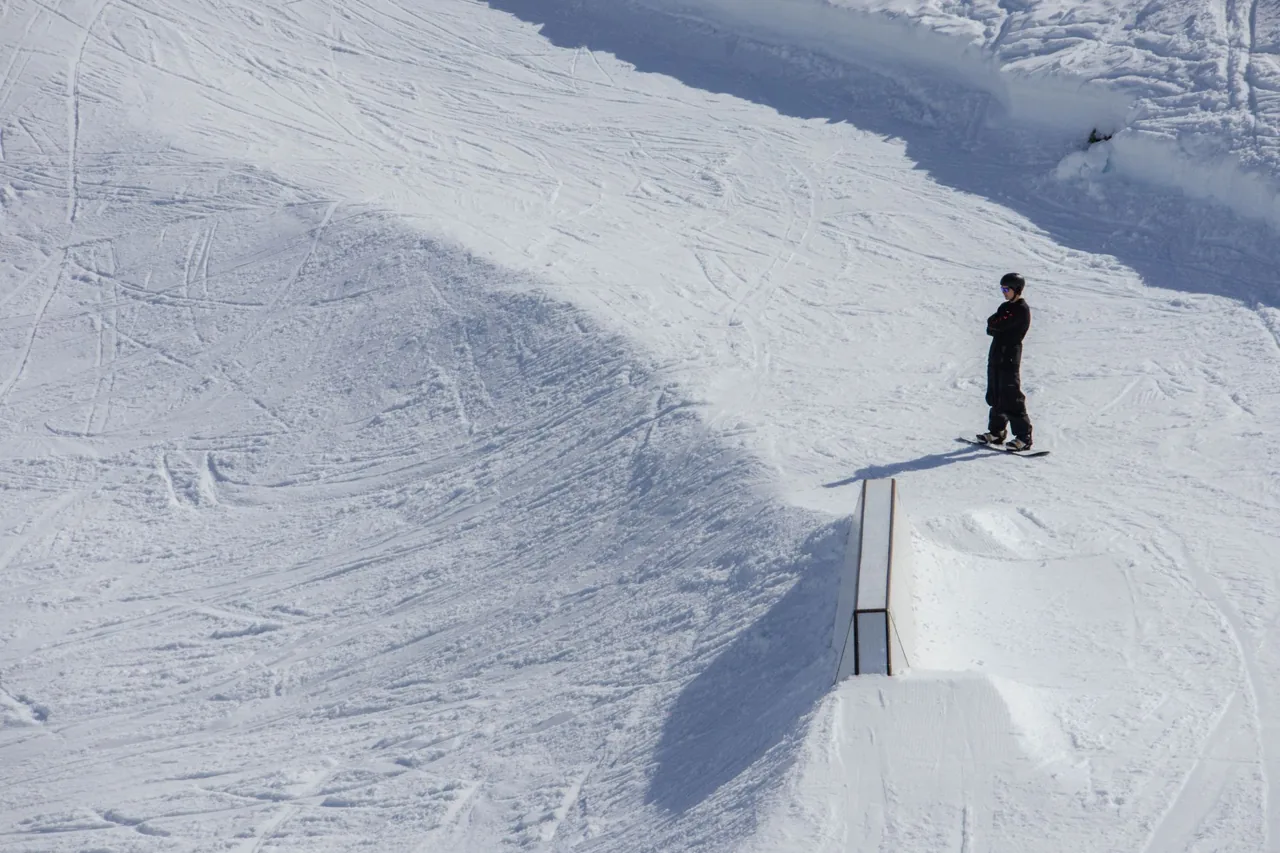
Nearly every park in North America uses the same orange signs, with small, medium and large features labeled using ovals in different sizes. Start small. A small box or a run of small rollers will teach you more in an afternoon than a medium jump you're not ready for, and you'll still be walking at the end of it.
The industry's 'Smart Style' message is posted at most park entrances for a reason: make a plan, look before you leap, easy style it, and respect gets respect. They sound like slogans, but each one is a real rule that saves people from getting hurt.
Calling your drop
Before you head toward a feature, look uphill, see who's waiting and make it obvious you're going. A raised hand and a shouted 'dropping' is the standard. If someone else has already started their run, wait. Two people heading for the same rail at once is how most park collisions happen.
Don't hover at the top for ages either. If you need a minute, step to the side and let the line keep moving while you work up to it.
The same goes for lapping a single feature with a group. Take turns, keep the gap between riders sensible and don't follow so closely that the person in front can't bail without being run over. If you're practicing the same box over and over, let others in between your attempts.
Nobody minds a beginner. Everybody minds someone sitting on the landing.
Never stop below a feature
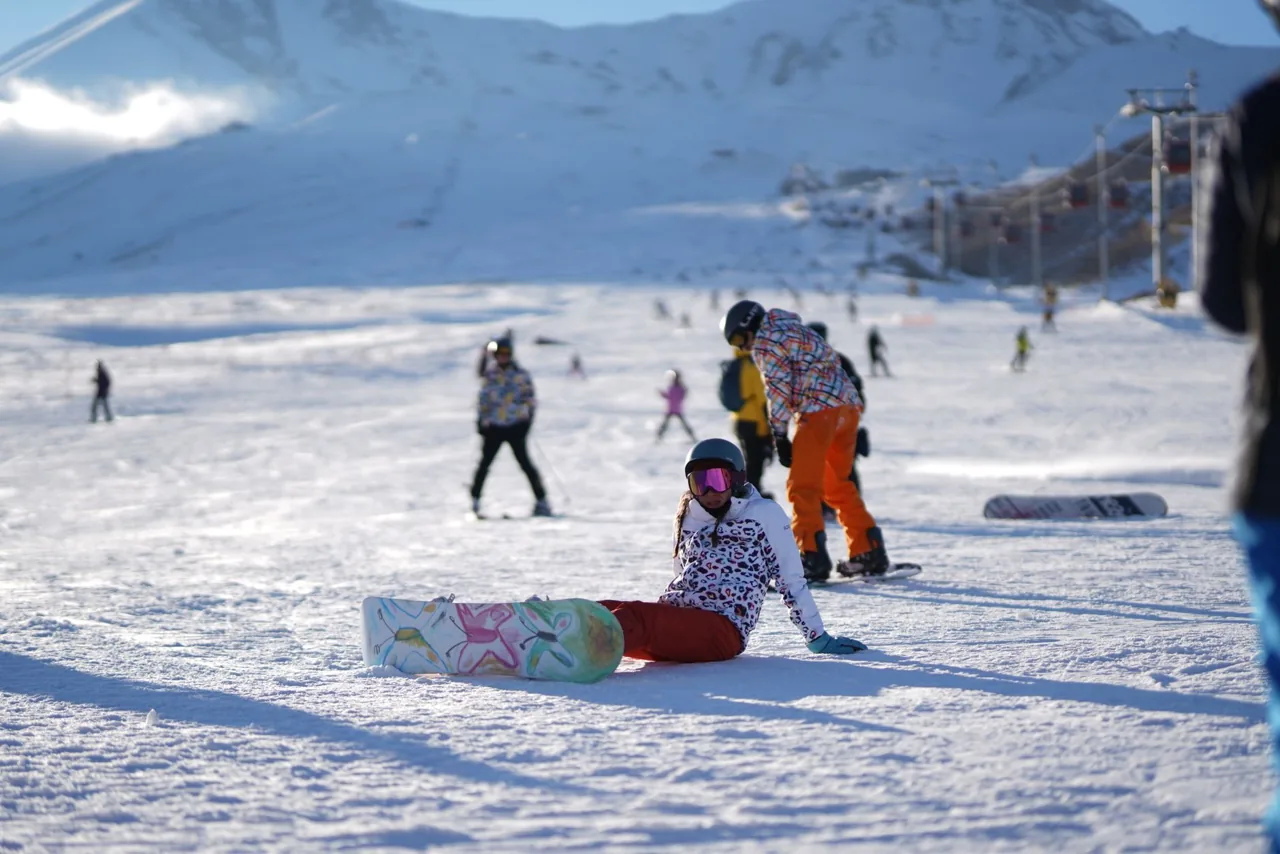
This is the big one. Riders landing a jump can't see over the knuckle until they're in the air. Sitting on a landing or stopping just below a lip puts you directly in the path of someone who has no way to avoid you. If you fall, get up and move to the side quickly, even if you're embarrassed and want to sit for a second.
If you need to watch a feature to learn it, stand well off to the side, uphill of the landing and clear of the line. A good spot lets you see the whole thing without being in anyone's way.
Start on the ground
Most park skills begin on flat snow. Ollies, nollies, presses and small butters on an easy groomer teach balance and pop without any risk, and they carry over directly to boxes and small jumps. When you're ready, ride straight over a small box a few times before you try turning onto it.
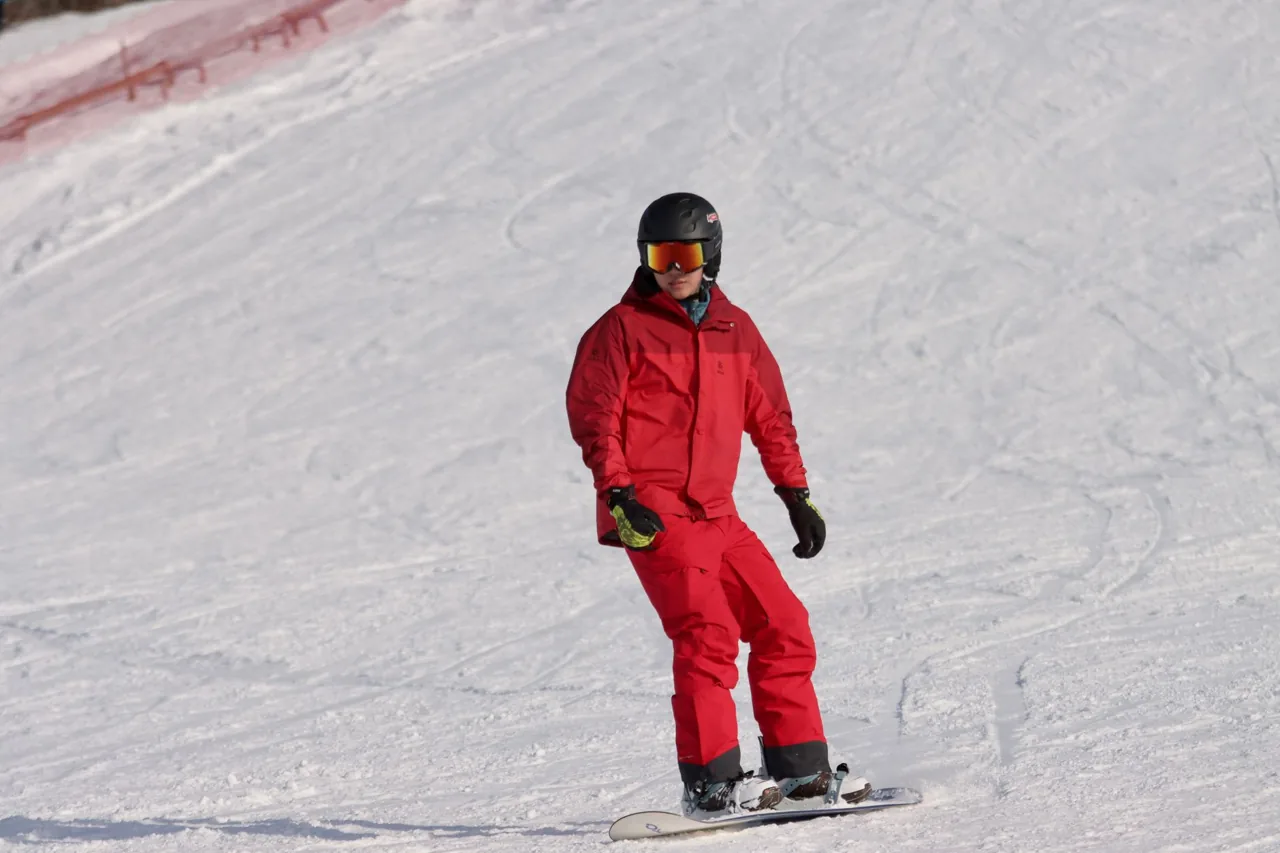
Riding a feature flat-based and straight, with your knees soft and eyes looking ahead, is a real skill. Getting that right is far more useful than a sketchy spin you can only land one time in five.
Finally, wear a helmet. In most parks nearly everyone does, and for good reason. Wrist guards and padded shorts are worth thinking about too, especially while you're learning to fall on hard, scraped snow. They're cheap compared with a month off the hill.