Where the chin rule came from
The old shortcut was simple: a board between your chin and your nose was 'about right'. It worked because almost every board in the shop was a fully cambered all-mountain stick with a similar flex, so height was a rough stand-in for weight and leverage. If you were tall, you were probably heavier, and a longer board gave you more edge to hold.
That stopped being true once manufacturers started mixing camber and rocker, cutting volume-shifted shapes and building park boards soft enough to fold in your hands. A 154 with a rockered nose can ride shorter than a 150 with full camber. The number printed on the topsheet tells you less than it used to.
You'll still hear the chin rule at every rental counter because it's quick, and when you're handing out two hundred boards on a Saturday morning, quick wins. It isn't wrong so much as incomplete. Treat it as a sanity check after you've done the real sizing, not as the sizing itself.
Start with weight, then riding style
Every serious brand publishes a weight range for each size, and that range is the first thing to check. Rider weight is what bends the board. A rider who's 5'11" and 150 pounds needs something very different from a rider who's 5'11" and 210, even though the chin test would hand them the same board.
Once you're inside the weight range, nudge the length by how you ride. Mostly park, buttering and spinning off side hits? Go toward the short end. Mostly groomers at speed, or you're heading west for real powder days? The longer end will feel calmer and float better. If you're new, sit in the middle and stop worrying about it.
Your weight decides how a board flexes. Your face has never once been involved.
Waist width matters as much as length
This is the one rental counters skip. If your boots hang too far over the edges, your toes and heels drag in the snow on hard carves and you'll wash out without knowing why. Most riders in a US men's 10.5 or bigger need a wide or mid-wide board, and plenty of riders in a size 9 are fine on a standard waist.
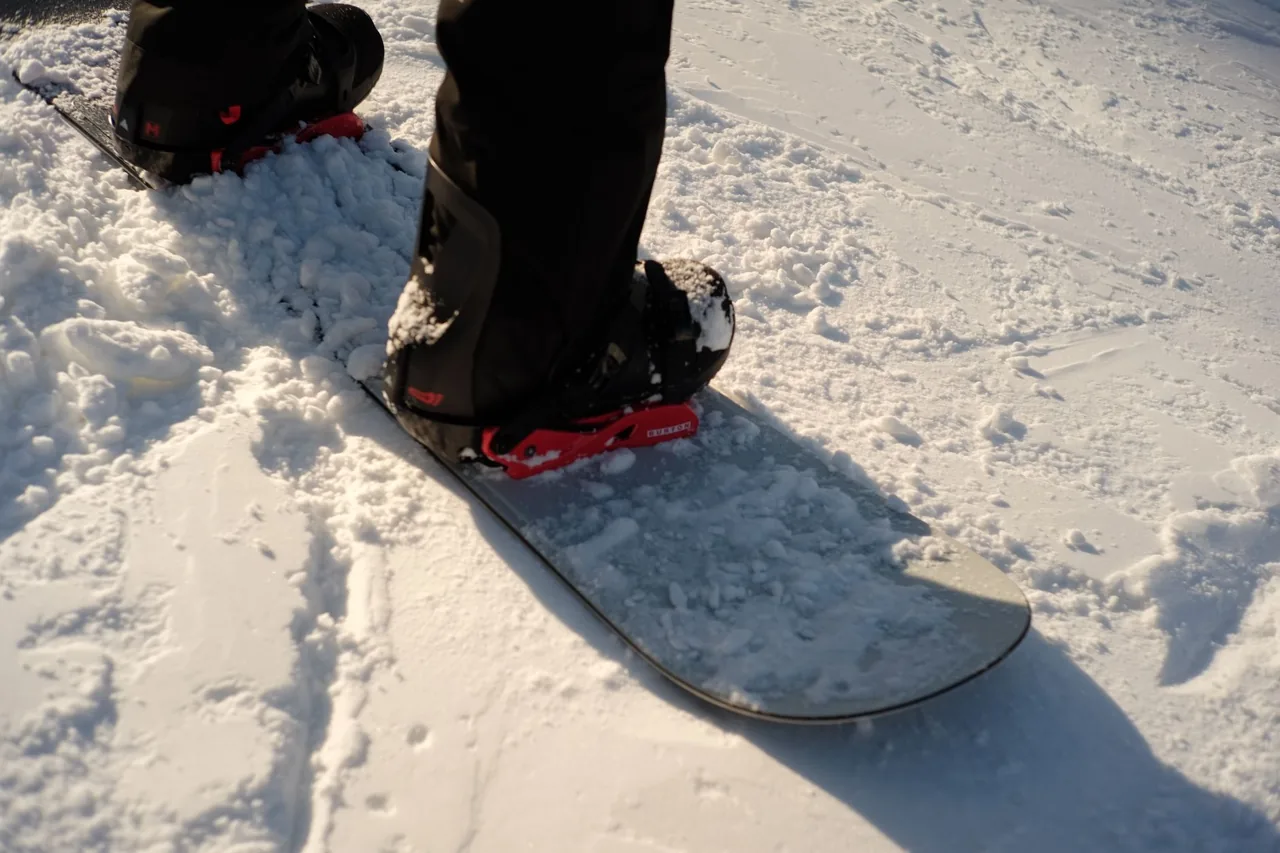
A quick check: strap in on carpet, set your angles and look down. A little overhang, maybe half an inch at toe and heel, is normal and gives you leverage. A full inch or more means you should look at a wider model before you look at a longer one.
Volume-shifted boards ride differently
Newer shapes that are short and wide on purpose throw the old charts out entirely. Riders often size down three to six centimeters on these because the extra width adds back the surface area. Read the brand's own guidance for those models, demo one if your local hill runs a demo day, and trust how it feels on the third run rather than the first. Nobody rides well on lap one with a new board.
And if you're stuck between two sizes with nothing else to go on, pick the shorter one if you're still learning and the longer one if you're already comfortable at speed. A board that's slightly too short is easy to ride and a little nervous at the top end. A board that's slightly too long is stable and hard work in tight spots. Neither is a disaster, and either is far better than a board that's simply the wrong width for your feet.