Regular or goofy first
Before anything else, figure out which foot goes forward. Regular means left foot forward, goofy means right. The old tricks still work: slide across a kitchen floor in socks, or have a friend give you a gentle push from behind and see which foot steps out to catch you. Most people already know. If you genuinely don't, ride both for a morning and pick the one that feels less awkward.
Once you know, write your settings down somewhere, along with the width and angles, so you can get back to them after a shop tune or if a friend borrows the board and moves everything around. A phone photo of the bindings with the disc numbers visible works perfectly well.
How wide to stand
A good starting point is a stance roughly as wide as your shoulders, which for most adults lands somewhere between 19 and 23 inches, measured center to center on the bindings. Most boards have a reference stance marked on the inserts, and that's a sensible place to start.
Stand too narrow and the board feels twitchy and hard to balance at speed. Stand too wide and your knees can't bend properly, so you end up riding stiff-legged and sore. A simple test: jump straight up on the spot, land naturally and look at where your feet ended up. That's usually close to the right width.
Also check that your stance is centered on the board, or set back slightly if the board is designed for it. Many all-mountain boards have a small built-in setback of a centimeter or two, which helps the nose float in soft snow. Park riders often center their stance completely so the board rides the same way in both directions.
If your knees ache by lunch, look at your bindings before you blame your legs.
Binding angles in plain numbers
Angles are measured in degrees from a line straight across the board. Positive means the toe points toward the nose. A 'duck' stance, like +15 on the front foot and -9 on the back, points both feet slightly outward. It's comfortable, and it makes riding switch feel natural, which is why so many park riders use it.
A forward stance, something like +18 and +6, points both feet toward the nose. It tends to suit riders who mostly carve on groomers, because it lines your hips up with the direction of travel. There's no single right answer. Try something, ride it for a full day, then change one thing at a time.
The small adjustments that add up
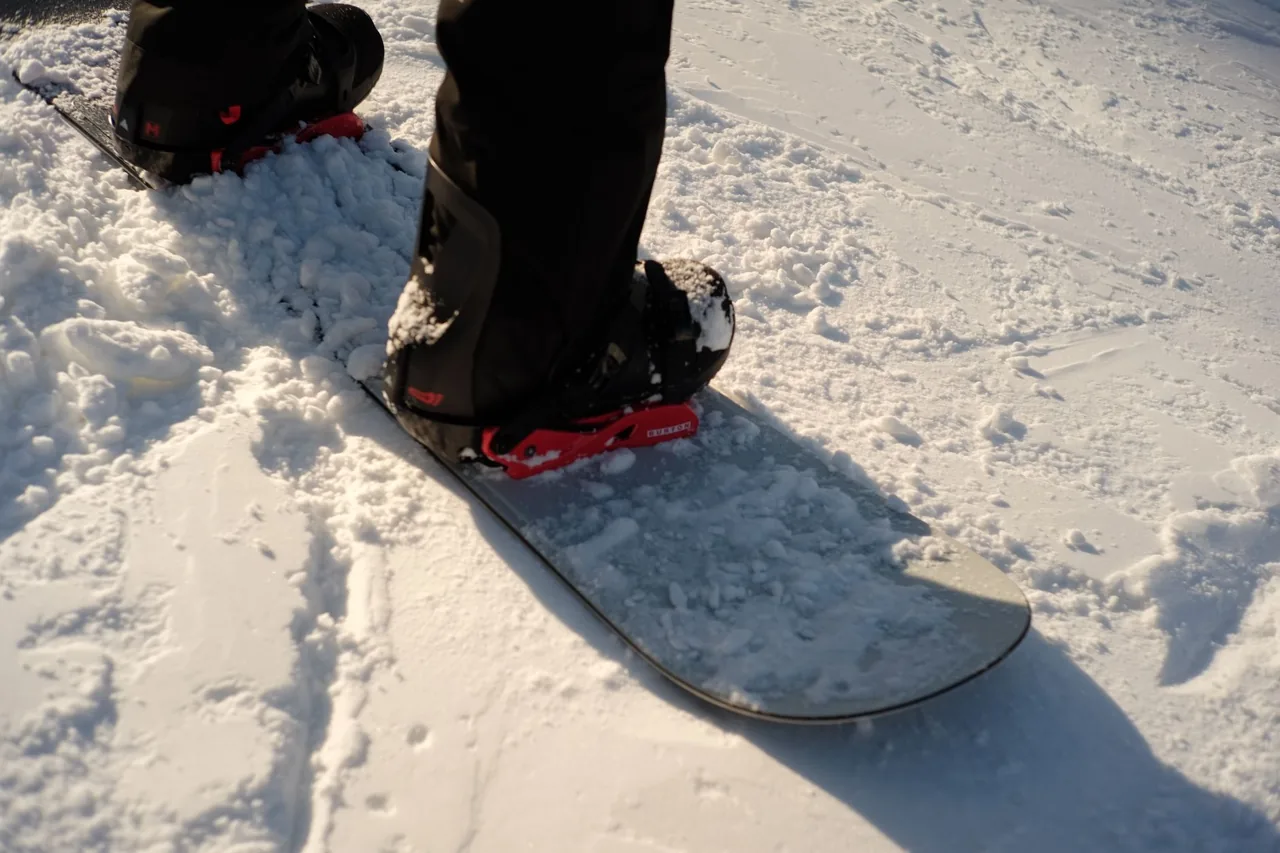
Highback forward lean is worth a look as well. A few clicks of lean puts you in a slightly more athletic stance and makes heelside turns quicker, though too much will tire your calves. Strap length matters more than people expect: the ankle strap should sit centered over the boot, and the toe strap should hold the front of the boot without crushing it.
Check the binding screws every few weeks too. They loosen. A binding shifting a few millimeters mid-season is a surprisingly common reason a board suddenly 'feels off'.