The walk in
Most people start at Pinkham Notch in New Hampshire and take the Tuckerman Ravine Trail, a steady climb of roughly two and a half miles to the floor of the bowl. It's a wide, rocky path, and on a busy April weekend it can feel like a pilgrimage, with boards on backpacks, boots crunching on old snow and dogs running ahead of their owners.
Budget a couple of hours to get up there with a board on your back, more if you're carrying heavy layers. People who rush it arrive with tired legs and then still have to climb the headwall itself.
Hermit Lake, near the floor of the ravine, is where most people stop to regroup, change layers and look up at the headwall for the first time. There are basic facilities there in season, but don't count on buying anything. Whatever you need for the day, you carry in, and whatever you bring, you carry back out.
The bowl is serious terrain
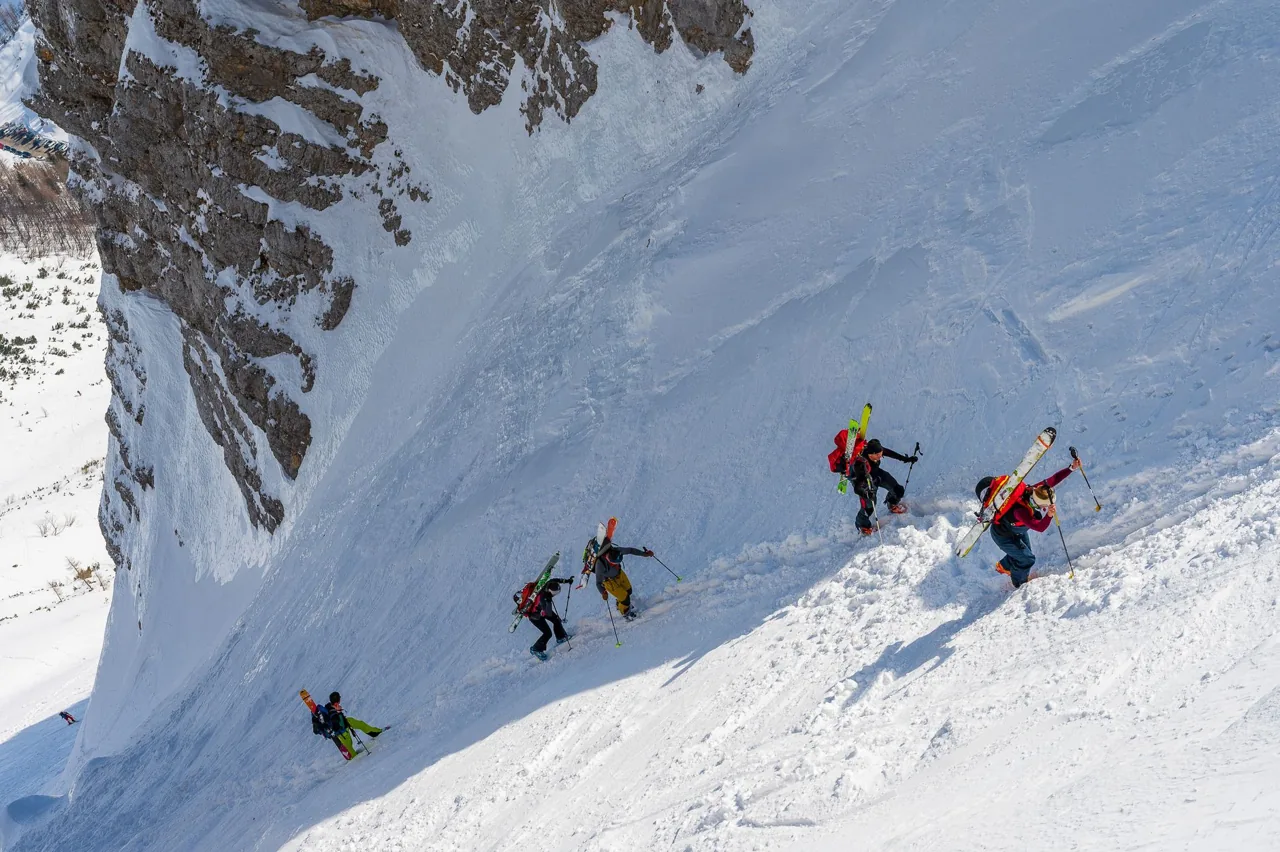
The headwall is steep enough that plenty of good riders spend their first visit watching from the rocks at the bottom. Slopes in the ravine run well past the steepest trail at any ski resort in the region, and a fall near the top can turn into a long, fast slide. There's no patrol sweeping the runs, and no one closing a line because it looks dangerous.
Late in the season the hazards change. Snow melts from underneath and leaves undermined crusts and hidden holes. Rocks and chunks of ice break loose from the cliffs above and roll down into the bowl, and crevasses can open in the snowpack along the headwall.
Nobody sends you up there. That's the whole point, and also the whole risk.
Read the forecast before you go
The ravine has its own avalanche and conditions forecast, issued by the Mount Washington Avalanche Center, and it's the single most important thing to read before you leave the car. It covers avalanche danger, but in spring it also flags falling ice, open crevasses and which gullies are in condition. Read the whole thing, not just the color rating at the top.
Weather on Mount Washington changes faster than almost anywhere in the East. A warm, calm morning in the parking lot can become cloud, wind and refreezing snow by early afternoon. Pack a shell, a warm layer, water, food and a way to call for help, and turn around early if the sky starts to change.
Pick your line honestly
Not every route here is the headwall. Gullies like Hillman's Highway and Left Gully are the more common picks for strong intermediate riders, though 'more common' doesn't mean easy. Watch a few people ride whatever you're considering, look at where they stop and where they slide, and be honest about whether a fall there would end well.
If you go once and only ride the lower apron, that still counts. Sitting on the rocks with a sandwich, watching the headwall in the spring sun, is half of why people keep coming back.
Most of all, know that walking back down is a perfectly good outcome. Experienced visitors turn around below their planned line all the time because the snow is too firm, the weather is moving in or they simply don't like the look of it. The mountain will still be there next spring, and so will the hike.